
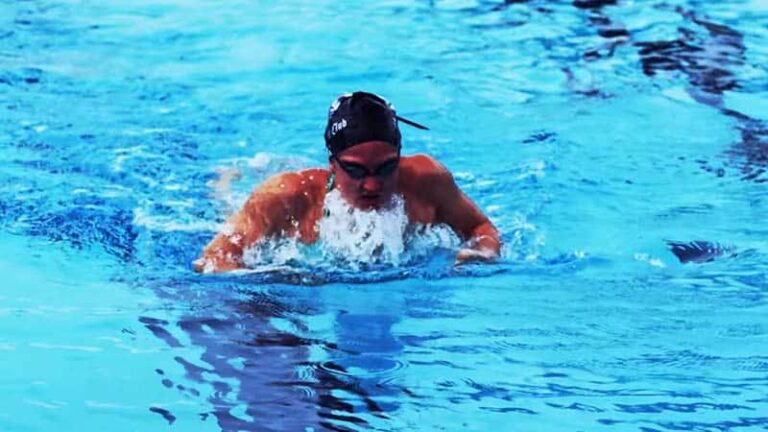
A swimmer was declared a false start and does not count as a missed event. The reason the swimmer false started is currently unknown. All athletes are encouraged to pay attention to warning signs before starting their competitions to avoid penalties or accidents.
Swimmers who miss an event will receive credit, even if they are subsequently disqualified from the race for another infraction during that race period.
What does DFS mean in swimming?
A swimmer has been declared a false start and their event will not be counted as a missed event. The reason the swimmer false started is currently unknown.
Athletes who miss events may be stripped of any medals, points or rankings they have earned in competition up to that point. Swimmers declared false starts must wait until the next round of their division before resuming competition.
False starts can have many causes, including poor technique or referee error.
Schwimmer declared a false start
DFS (Distributed Failure Sequence) is a problem with pool pumps that prevents them from working. If a swimmer declares a false start, the pool referee will stop play and give the other team the opportunity to play again.
DFS can also be caused by incorrect settings on your pump or worn parts in your equipment. To prevent DFS from occurring, make sure you have enough chlorine in your pool and regularly check your equipment for wear and tear.
If you experience DFS, don’t panic: there are usually ways to resolve the problem without shutting down the pool completely.
Does not count as a missed event
If you have any questions about the rules or participation in a Dive Flag Shelf (DFS), please contact the organizer directly. You cannot make up missed events even if you are registered and show up for the competition, but your dive gear cannot count as a completed event. DFS are an important part of competitive diving, so it is very important that everyone adheres to the same guidelines and follows the rules.
Be sure to check with your local club before heading to meetings – many clubs hold DFS during their meeting hours. Remember; If you have any doubts, contact the organizer
Reason for reporting a false start
In swimming, a false start occurs when an athlete begins their race before the starter has been pulled. The consequences of a false start can be serious: first place cannot be awarded, points may be deducted and penalties may also be imposed.
There are several reasons why athletes may report a false start: for example, if they feel ill or injured; if there is noise or commotion from the crowd; or if they don’t hear the gunshot. If you are involved in an incident where someone claims it was a false start, it is important to remember that you also have rights, including the right to defend yourself against allegations of fraud or of bad conduct.
By following these guidelines, you can avoid unnecessary hassle at your next swim meet and maintain your rightful place on the top of the podium.
What does DFL mean in swimming?
If you’re experiencing any of the following issues at a swim meet, it’s time to call it a day: DFL – Dead Friggin’ Last. A false start can be catastrophic if not addressed in time. Uneven hand touches mean your opponents have an advantage on the scoreboard.
Before each race, familiarize yourself with these conditions and be careful to avoid them. Don’t give up yet – practice makes perfect. Don’t forget heatstroke prevention techniques like drinking plenty of water and using sunscreen.
What does DNF mean in swimming?
Swimmers can fail for many reasons, such as lack of fatigue or technical problems. DMA (Did Not Acknowledged) sometimes occurs after a DNF and can indicate physiological or technical problems.
Swimmers often share their successes and failures on social media, providing valuable feedback to others in the swimming community.
What does MS mean in Olympic swimming?
The letters MS stand for “mixing zone.” This is the area where athletes from different countries can compete together. The rules are different there, so it is important to know them if you want to participate in the Olympics.
- When swimming, the higher the MS value, the faster the swimmer. Faster swimmers have a high MS number and can cover more ground in less time than slower swimmers. A high MS value also means that the swimmer has good body control and can move quickly through the water.
- Swimming speed is measured in km/h (kilometers per hour), while an MS value measures how fast a swimmer moves through the water compared to someone swimming at a different speed (for example, someone ‘one who would have swum at 50 m/hour, a MS value). of 5).
- The speed of a slow swimmer is measured in km/h, while the speed of a fast ms swimmer is greater than that of a slower ms swimmer (for example, if you swim at 100 m/h, your value ms is 10).
What is a false start in swimming?
A false start in swimming occurs when a swimmer jumps into the pool before the start signal is given, which can cause their teammate to move and lose time.
Make sure you expand quickly after your false starts by moving forward rather than backward. Swimmers who make too many false starts will lose ground in the race and may even have difficulty keeping up with the pace of the race.
Make sure to pay attention to the start signal and take your starting position as quickly as possible – this will ensure a smooth racing experience for all participants.
What does BK mean in swimming?
When a swimmer “passes out” or loses consciousness, it is called BK (beyond ketosis). This means their body has switched from using glucose as an energy source to using ketones.
Ketones are created when the body breaks down fat and provide a quick source of energy to muscles when there is a risk of losing too much water.
Backstroke: Swim with your back to the wall, then turn around and face it when you reach the end of your lap.
Backstroke is a swimming technique that allows you to cover more ground in less time. To save energy, you should swim with your back to the wall when using this swimming style. Once you reach the end of your lane, turn around and face it again.
Fly: jump into the air and place both feet behind you
To swim in flight, start by jumping into the air and place both feet behind you. This will give you a little more height before diving back underwater.
Butterfly: Kick your legs forward, then bring them together so they touch at the bottom.
The butterfly stroke is a very fluid stroke that requires good coordination between leg muscles and breathing technique. To perform this stroke, extend your legs straight out in front of you, then bring them together so they touch at the bottom, maintaining contact throughout the stroke.
What does OC mean for swimming scores?
OC stands for “defeat chlorine.” It is a scoring system used by the International Swimming Federation (FINA) to determine swimmers’ performance in various events.
OC stands for Owned and Operated. If you are swimming in a pool or spa that is owned and operated by an individual (not a corporation), all on-site pools and spas must be measured, licensed, inspected, and in good repair.
If you become the owner of the property within twelve months of maintaining your OC with the NSW Swimming Pool Register, you will need to reapply for an OC with the NSW Swimming Pool Register.
What does NS mean in swimming?
NS (No Stroke) is an official signal given to a swimmer at the start of their stroke to indicate that they will not be competing. This means that they are not using any energy and are simply floating on the surface of the water.
Swimmer did not compete in the event
If a swimmer is not competing in an event, they must have a time equal to or faster than the NST qualifying time for that event. If the swimmer is competing in an event and their time is slower than the NT qualifying time for that event, this will be indicated by a (NT) next to their name.
Slower than (NT) – Indicates that the swimmer has achieved a time slower than the NT qualifying time for the event.
A (NT) next to a person’s name means that their performance was slower than what would qualify them to compete in that particular competition or race. This indicates their performance compared to other athletes competing at the same or close level of competition.
The swimmer participating in the event must have a time equal to or greater than the NST qualifying time
It is important to note that if you are participating in an organized swimming event, you must have an entry on the timesheet that matches your registered event number and meets all USMS/NISOA qualification requirements /USOC, etc. If there are qualifiers associated with your selected course B. Age Group Preliminaries/Finals etc., you must provide proof that you swam under 1 second(s), 500 meters OR 50 meters from one of these designated points during open water training before the same day of your choice. are Meet as indicated on your Meeting Scheduler page to be able to attend.
The swimmer entered in the event must have a time equal to or faster than the NST qualifying time. If you are participating in an organized swim meet, you must have an entry on the time sheet that matches your registered meet number and meets all qualification requirements established by the USMS/NISOA.
Recap:
Dfs stands for “Dense Sheet Structure”. This is a characteristic of many plants that grow in moist, well-drained soil. This means that the leaves are tightly packed together so that water and nutrients can easily reach the plant’s roots.
document.querySelectorAll(‘#aawpclone .buy-btn’).forEach((e)=>{
e.addEventListener(‘click’, ()=>{
window.open(`https://www.a`+`ma`+`zo`+`n.co`+`m/dp/${e.getAttribute(‘minu’)}?tag=tpacku-20&linkCode=osi&th=1&psc=1`, ‘_blank’)
})
})