
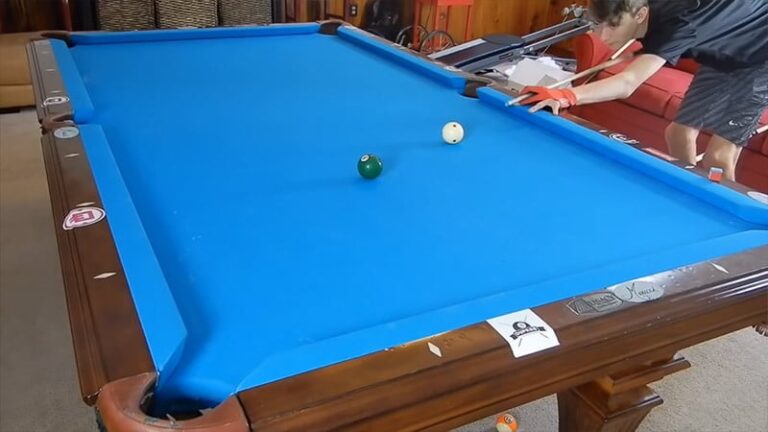
Put a cue ball in your pocket and make sure the other balls don’t touch each other. Make sure you pocket the cue ball before it rests in your hand or on the table – only one shot is allowed per round.
If you hit an object ball, your turn ends and someone else can take their turn. Keep track of where each cue ball is by keeping an eye on the light-illuminated position at the end of the table – ensuring you have a chance of pocketing a cue ball when you return to the set of tables.
Don’t hesitate to ask for help if you need it: there’s nothing like failing under pressure.
What is a pool table scraper?
It’s important to keep track of the cue ball so you don’t accidentally take balls or miss shots. You can only hit the cue ball once per turn, regardless of the number of objects on the table.
If you hit an object ball, your turn ends and the next player has the opportunity to play again. In Cue Ball Pool, precision and good aim are important to succeed. Remember these rules before you start a game: you’re sure to have fun.
The cue ball must be sunk
In billiards, a cue ball must be pocketed to win the game. An unpocketed cue ball will result in a scratch on the table, which can cost you points and possibly the game.
When you manage to pocket the cue ball without touching it too much, this is called “scooting” or “shanking”. It’s important to make sure your cues are properly balanced so that they hit the balls directly, otherwise you’ll end up scratching the tables as well.
Learning to play pool effectively takes practice and patience, but don’t forget about the scratches on the table.
Notes must not touch each other
When playing billiards, sometimes the cue ball collides with another object on the table and causes a scratch. If there is no other obvious explanation for the scratch, it can be called a “table scratch”. To be considered a legal shot, the cue ball must protrude at least 20 cm above the rail before coming into contact with an object.
Some cues are more likely to scratch the table than others – for example, bent or warped rails can leave sharper edges when hit by balls. It’s important to consider your speedball game when trying to avoid scratching the table: different types of shots require different strategies to avoid damaging your equipment.
The balls must rest in the hand or on the table
A scratch on a pool table occurs when one or more balls come to rest on the surface of the table. To avoid this, always hold your billiard balls in your hand or place them on a flat surface before playing.
If you leave a scratched table, avoid rapid movements and try to clean the table as quickly as possible. As long as you take these precautions, you shouldn’t have too many problems with pool ball collisions.
Remember: it’s not about who gets the most points, it’s about having fun.
Only one shot is allowed per turn
A scratch on the table is a common occurrence in pool, but can cost you points if left undetected. Be sure to keep an eye on other players and watch for possible scratches on their tables before making your move.
If you see a scratch, call TIME-OUT and take a snapshot of that location instead of trying to take your own scratch. Don’t hesitate to ask another player for help in finding an elusive table scraper: they may have seen it before you.
Always remember: only one shot is allowed per round, so use it wisely: there is no penalty for an accidental shot.
If you hit an object ball, your turn ends
A table scratch in billiards occurs when a ball touches an object ball and that object ball touches another object ball, which then scratches the table. If you’re playing with people on your side of the table, this type of collision can cause you to lose your turn.
Before you start your next game, make sure all balls are sorted correctly to avoid accidental collisions. If you come into contact with an opponent’s cue during the shot and they scratch the table in response, it will be considered a foul against them and they will likely lose their next shot as well.
When playing billiards, always pay attention to what is happening around you: accidents can happen.
What happens after a scratch in the pool?
If the cue ball scratches the billiard table, it must start from the base point and there must be no object ball in the hand, while the cue ball must be able to hit the black (and vice versa).
Red can only hit blue and green along the rest lines – any other color results in a foul. White cannot touch black or red – these are both considered “stripes”. A scratch in pool is like a mistake in playing: learn from your mistakes and move forward.
What counts as a scratch in 8-ball?
In the 8-ball game, a scratch occurs when you leave a mark on the table with your cue ball. Scratches can be caused by anything from accidental contact with another player’s cue ball to hitting the edge of a table.
In 8-ball, a scratch is defined as any object ball that has been hit and moved away from the table, so it no longer counts towards your innings. This means that you cannot shoot again until one of the balls on the table (except the cue ball) has been hit again.
Is a scratch on the table on the 8 ball a loss?
If the 8 is not pocketed or jumped off the table, a scratch or a foul is not considered a loss of the game. The incoming player has the cue ball in hand and can make any legal shot – including a combination shot – to attempt to legally pocket the 8-ball.
A combination shot cannot legally be used to pot the 8 ball, as that would involve hitting both balls at the same time. It is important to know how many games are still in progress when an incident occurs so that all players involved know where they stand.
Remember: fair play is key, no matter what happens on the table.
How many stripes are allowed in the pool?
The number of stripes allowed on a swimming pool depends on its size and type. For example, an in-ground pool with a plastic liner has fewer restrictions than a pool made of vinyl or other materials that cannot be scratched.
In general, any scratches larger than 1/8 inch (3 mm), extending over an area of at least 2 square feet (0.9 m2), or present in sparkling water will result in damage to the pool and will require repair.
A scratch on the tablecloth is considered a foul
If you perform an illegal trick shot and it leaves a mark on the pool table, your team must forfeit. Even if the scratch is accidental, it will still be considered a foul and will cause your team to lose points.
Do not hit the 8 ball with your hand (unless it is used as a joke)
This rule is quite simple: don’t touch the 8 with your hand. That’s not to say you can’t have fun with such shots, but be aware that other players might not enjoy it.
During a group game or tournament, any player who makes more than two scratches during their game must abandon their marks and withdraw from the event.
In group games or multi-round tournaments, any player who makes more than two scratches during their game must abandon their signals and withdraw from the event – no questions asked. This also includes casual games: if someone makes big mistakes and ends up making a lot of them, they may need to stop before things get too serious.
Do not hit the 8 ball with your hand (unless it is used as a joke)
Although not explicitly stated in the rules of billiards, hitting the 8 ball with the hand is generally frowned upon as it can easily result in unbalanced shots which can affect other players’ chances of winning in Pool Party mode or any other Competitive play could affect the match scenario. .
What is an illegal break in an 8-ball pool?
When a player fails to pocket the ball and his opponent succeeds in pocketing it, it is called an illegal break. If the table is declared illegal due to any of the following conditions, the game is considered a draw: the balls are not pocketed; If one or more balls fall from the table without being touched; If any object other than a cue comes into contact with any of the rails at any time during the shot (including intentional contact with another player’s hand or clothing).
Do you lose if you scratch the break?
If you kick the ball away on a legal kickoff, all pocketed balls remain pocketed. If you do this, it is a fault: the table is ready to play after an error on a legal break shot.
The table closes when the ball leaves the breakpoint or goes out of bounds beyond the breakpoint boundary line (see image below). There is no penalty if your opponent breaks the ball and then scratches it while their ball remains in play – they are considered to have “won” that particular point.
For more information on how to determine whether or not your break has been corrupted, see the tables below.
What are slops in the pool?
An infinity pool is an accumulation of water and dirt at the bottom of a swimming pool. This can cause problems for swimmers, such as: B. making it difficult to swim or getting stuck on the bottom.
Mud can also damage your pool deck and equipment.
A slop shot is a billiard shot that has not been announced
If you make a shot in the pool without announcing it, you have made a “slop” shot. This type of shot is legal when playing various pool games in the slop version, but it is illegal when playing in the non-slop version.
Luck or chance can play a role in executing an angled shot, and there is no correct way to hit the billiard ball when it hits the cue – just use good aim and good technique.
When shooting with a billiard cup, it is important to aim well and use good technique
When shooting pool, proper aim and technique are essential to achieving consistent results.
Before shooting, you need to know how far to hold your cue so that you always hit the object ball directly. Additionally, always keep an eye on both balls when playing so you can judge where they will go next. After all, practice makes perfect.
Recap:
If you see a white or yellow area on the bottom of your pool, there is probably a scratch on the table. Scratches on the table can be caused by pieces of wood left on the water surface or by human feet walking on the water surface.
If you notice signs of damage to your pool liner, it is best to replace it as soon as possible to avoid major damage.
document.querySelectorAll(‘#aawpclone .buy-btn’).forEach((e)=>{
e.addEventListener(‘click’, ()=>{
window.open(`https://www.a`+`ma`+`zo`+`n.co`+`m/dp/${e.getAttribute(‘minu’)}?tag=tpacku-20&linkCode=osi&th=1&psc=1`, ‘_blank’)
})
})