
If you want to put less strain on your equipment when hiking or climbing, pivot left instead of right when going up or down a hill. Panning can also help avoid getting stuck in the vines and other plants that often line mountain sides.
It is important to be aware of your surroundings and use caution when panning to avoid injury or property damage. 4. Remember: Always carry extra supplies in case an unexpected obstacle arises. These simple adjustments can make your outdoor experiences more enjoyable and put less strain on your body and your equipment.
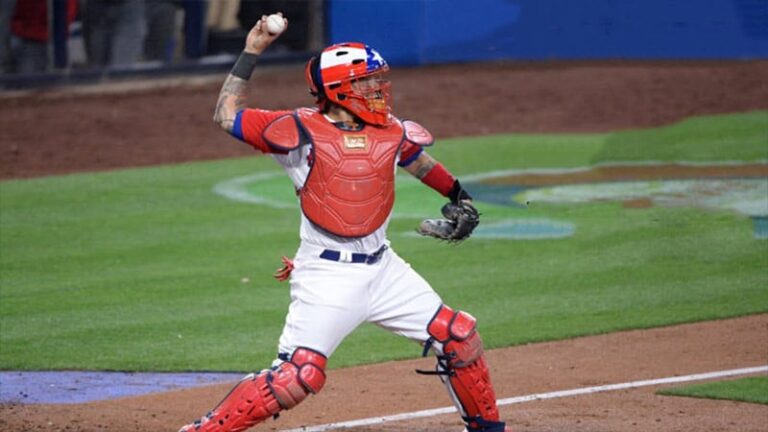
Why are there no left-handed catchers in baseball?
When it comes to loading, the heavier your item, the more difficult it is to move. To make your work easier and reduce strain on your back, consider the P-pivot to the left when you go on a trip.
This maneuver changes the orientation of your items in your backpack so that they are not resting directly on your shoulders or spine. A twist to the left can also relieve shoulder tension and other pain related to carrying heavy objects throughout the day.
By following these simple steps before you set out to explore the world, you can save yourself from potential problems and increase your enjoyment of traveling.
To turn left
Left-handed catchers are not used in baseball because the majority of players play with their dominant hand. Panning left instead of right can lead to more errors, especially when trying to return a ball to home plate.
Additionally, there is less room on the right side of the catcher’s glove to catch a ball and return it to first base. Some teams may choose not to use a left-handed catcher because they believe he will have difficulty catching balls that bounce off their body (called a “dead arm”).
The decision whether or not to use a left-handed catcher is usually made by team leaders based on that player’s performance in tryouts and workouts.
Burden
Left-handed hitters are not that common in baseball because it is difficult for a left-handed catcher to handle the ball with his right hand and throw it to first base.
There are few left-handed receivers because they have less range than right-handed receivers and are therefore more likely to be caught stealing or making a mistake on defense.
Additionally, it is more difficult for a left-handed hitter to hit the ball over the head of a right-handed pitcher because their swing is generally different from that of most other players. Although some teams use a left-handed specialist to catch all lefties, this is less common overall.
If you want to play professional baseball, it’s probably best for you to master two-handed strikes and strikes.
Can you have a left-handed catcher in baseball?
Yes, you can have a left-handed catcher in baseball as long as he is good enough to do the job and there is no official rule against it. Some teams may be more hesitant to use a lefty because the position is rare, but if you are good enough they will find a way to use you.
If you are looking for an opportunity to play as a left-handed catcher in professional baseball, start training early and work hard on your skills so that when the time comes, you can prove your mettle.
Why don’t lefties play shortstop?
There are several reasons why lefties may not want to play shortstop. The most common reason is that they feel more comfortable hitting from the other side of the plate. Other factors that might influence someone to not play shortstop include their strength and batting average at the position.
- Lefties are generally not drafted or signed for the shortstop role because they have limited range of motion and unusual shape, making them less than ideal for the position.
- Because left-handers don’t have the same agility as right-handers, they struggle to get a foothold quickly enough to play in the middle of the field. This limitation can also cause them to miss balls from distance and make errors at shortstop.
- Additionally, their range of motion tends to be slightly shorter than that of right-handed hitters, meaning they often lack the accuracy needed to throw short passes and successfully steal bases.
- Finally, due to their different batting stances, lefties tend to have poorer hand-eye coordination when it comes to hitting balls out of the park to either side of the plate.
Are there any left-handed catchers in the Major League?
There are left-handed catchers in the major leagues, but they are rare. There are several reasons for this. Left-handed hitters tend to be less effective at hitting from the right side of the plate, so teams generally prefer to use their regular catcher when hitting from that direction. And many managers believe that having a left-handed hitter behind the plate gives him an advantage when calling pitches because he can see them better from his perspective.
There are left-handed catchers in the major leagues
There are a few left-handed catchers in the major leagues, but it’s not an entirely common position. Left-handers Dale Long and Mike Squires are two of the most well-known players at the position. Distefano was one of only three left-handed hitters to ever see a game in MLB history.
Distefano is one of only three left-handed hitters caught in the major leagues since 2005.
Distefano is one of only three left-handed catchers to play in the MLB since 1905, meaning he’s played the position at some pretty historic times. The other two players were Dale Long and Mike Squires.
There are no right-handed hitters playing catcher at any level in baseball today.
Interestingly, there is not a single player who plays catcher exclusively with his right hand – all professional teams also use both hands for catching. This ensures that every player has an equal chance to make an impact on every pitch on the field.
Dale Long and Mike Squires are the other two left-handed hitters playing in Major League Baseball.
Was Tom Brady a left-handed receiver?
Tom Brady is one of the most famous and successful athletes in the world, but did you know he was once a left-handed wide receiver? When he played football for Wesleyan University, he caught footballs with his left hand. But after Tom was drafted by the New England Patriots in 2000, he became a right-handed quarterback.
Tom Brady wasn’t really a left-handed receiver. He was drafted by the Montreal Expos, but decided to play football instead. The move may have cost him some catching skills, but he remains a world-class quarterback and one of the greatest athletes of all time.
Why is it better to be left-handed in baseball?
Due to their throwing motion, left-handed pitchers reach first base faster than right-handed pitchers. They also automatically face a runner who starts first, making it easier for them to complete a relay.
In baseball, being left-handed can be an advantage since most hitters are right-handed.
What sport prohibits left-handed people?
Left-handed people are not allowed to play many sports because the equipment for that sport is designed for right-handed people. Polo is an exception, however, because the ball and bat are intended for left-handed players.
If you want to play polo as a left-hander, it is important to check if your local club accepts left-handers. There are also online leagues that allow players from all over the world to compete regardless of their hand orientation.
When playing sports, always be aware of your surroundings: accidents happen to even the best athletes.
What sports are prohibited for left-handed people?
There are some sports in which left-handed players are not allowed. These include boxing, fencing and mixed martial arts. Indeed, it can be very difficult for left-handed people to use their hands correctly during these activities.
- Polo is a right-handed sport that was originally played with a bat and ball. Left-handers were not allowed to participate in polo competitions to avoid the risk of head-on collisions between players.
- Left-handers are not allowed to participate in traditional polo tournaments because it may be difficult for them to handle the ball correctly with their left hand. Additionally, left-handed players are at increased risk of injury if they collide during play.
- There are still a few amateur tournaments that allow left-handed players, but professional leagues generally do not allow this due to safety concerns related to collisions between opponents with different weapons (racquets).
- Although left-handed players are generally not welcome in professional level polo matches, there are occasional exceptions for those who possess exceptional skills or demonstrate great potential on the field (regardless of hand) .
Recap:
There isn’t much historical evidence to support the claim that left-handed catchers are essential to baseball, so there may be some reasons why teams generally don’t use them.
Some theories suggest that left-handed catchers are at increased risk of injury due to their unique anatomy, and other teams may believe they can compensate for their lack of hitting ability with defensive ability.
It’s possible that left-handed catchers could become more common in baseball at some point if there’s a high demand for them from fans or players, but at this point, that seems unlikely.
document.querySelectorAll(‘#aawpclone .buy-btn’).forEach((e)=>{
e.addEventListener(‘click’, ()=>{
window.open(`https://www.a`+`ma`+`zo`+`n.co`+`m/dp/${e.getAttribute(‘minu’)}?tag=tpacku-20&linkCode=osi&th=1&psc=1`, ‘_blank’)
})
})