
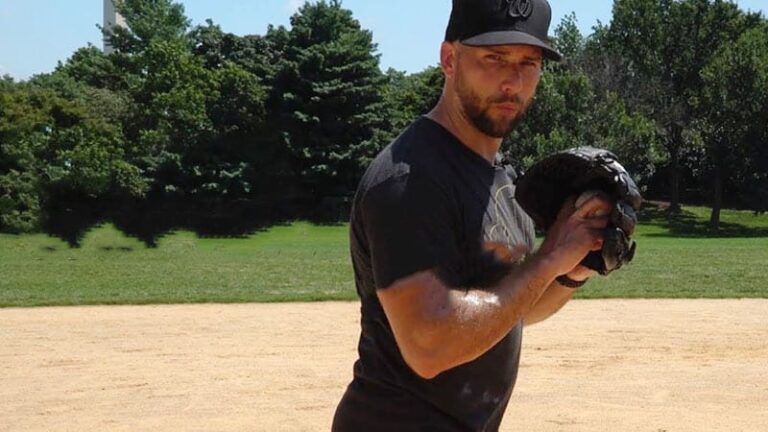
Pitchers use different throws to surprise their opponents and throw them off balance. The pitch you see may not be the one he throws next time – pitchers try to keep their opponents guessing.
Tipping is an important part of baseball and can often be revealed by a pitcher’s actions or body language on the field. Understanding how pitchers throw based on what they have shown in previous games will help you make better decisions when hitting or pitching against them.
Why do pitchers tip pitchers?
Pitchers use different throws to surprise their opponents and keep them guessing. The throw you see may not be the one he throws next time. It is therefore important to pay attention to your movements on the mound. Pitchers attempt to keep their opponents off balance with different movement and throw patterns.
Locations can be distributed as tips
Pitchers can tip the scales by simply offering their services to hitters during batting practice. By giving pitchers tips, hitters can get a feel for how they are throwing and improve their accuracy over time.
Pitchers can also receive additional compensation if they tip well or influence the outcome of the match. Tips are often paid in cash, so it is important to be discreet when giving them. Tipping is an old tradition that has existed for many years and is still practiced today in professional baseball leagues.
Pitchers use different types of throws to surprise their opponents
Pitchers use different types of pitches to surprise their opponents and thwart their hitting strategies. Sliding pitchers throw a pitch that curves downward, while a swing pitcher throws a pitch with more vertical motion.
A curveball is thrown as a pitch against righties, while for lefties it is the primary bid to knock them off balance. Pitches may also be specially designed to encourage batters to hit certain pitches rather than hitting balls that they would normally hit safely.
With so many variables in every baseball game, pitchers must constantly adapt their techniques to keep their opponents guessing
The throw you see may not be the one he throws next time
Pitchers may throw different pitches depending on the situation, and hitters may not see them next time if they’re not careful. The throw you see might be a variation of the throw thrown next time – look for changes in speed and arm position.
Pay attention to the throwers’ breathing and body language; These clues will give you an idea of what happens next. Pitches can change suddenly as hitters make adjustments. So always stay vigilant. It takes practice to develop good pitching skills, but with patience, you will eventually improve your accuracy.
Pitchers try to keep their opponents guessing
Pitchers try to keep their opponents guessing by tipping the scales. By tilting the pitch, pitchers can throw their opponents off balance and disrupt their rhythm.
Pitchers can also choose to tip the pitch to score a hit or force the other team into an error. Tipping locations can be difficult; However, it is important for pitchers to practice and master this strategy in order to be successful on the field.
Tips on how to perform best are often kept secret between the pitcher and catcher, so opponents never know what’s coming next.
What does it mean when a baseball pitcher tips?
When a baseball pitcher tilts his throwing motion, he gains an advantage. By tilting the ball, they can control where it goes, creating more speed on the field.
This technique is illegal in professional sports, but is used by amateurs and young players to improve their game.
- When a baseball pitcher overthrows a pitch, it means he does not know what he is throwing and has no control over the ball. Pitchers use their body and hands to control throws. Therefore, tipping a pitch may be an indication of poor accuracy or arm strength.
- Some pitchers tilt their pitches to make it more difficult for batters to hit. This technique is called telegraphy and can be performed in different ways, such as: B. changing hand positions, using different arm angles, or moving the body before releasing the ball.
- Tipping a pitch can affect both a pitcher’s statistics and their probability of winning; depending on the evidence of the pipe and how often it occurred. If other players are able to recognize this type of pitching behavior, they may be better prepared to hit certain types of balls, which could result in losses for the pitcher.
- Telegraphing can also cause problems on throws intended to go straight to midfield. If you see your player tipping his pitches, try positioning yourself closer to home plate so you can more easily catch thrown balls as you move away from him (and potentially score runs).
Can a pitcher lick his fingers before a pitch?
There is no rule against a pitcher licking his fingers before throwing a pitch, but most pitchers don’t do it. The main reason this is not done is that saliva can get on the ball and affect its movement.
- In baseball, it is customary to wipe your hands before taking the mound. This action helps avoid possible contamination that could affect your performance on the field.
- It is also common for pitchers to lick their fingers before drying them. This ensures that they do not come into contact with the rubber when retrieving and releasing the ball onto the plate.
- Pitchers cannot be completely dry when they want to throw a pitch; There should still be some moisture in the fingertips so they can properly grip and control the ball upon release.
- If you touch or rub something else on the rubber while wiping your hand, such as a shirt pocket, it creates friction which can lead to poor throwing mechanics and poor performance on the field.
- If you have any questions about good hygiene practices before taking the mound, please contact one of our experts.
Why do pitchers get a new ball when it lands in the dirt?
Catchers constantly change baseballs to ensure fair play and prevent the ball from becoming dirty or wet. Dirt on the ball can cause a referee to call for a new ball, which must then be rejected by the player.
If it is the thrower’s ball, he can continue to use it on his next shot, even if it hits the ground after being thrown. An illegal pitch occurs when someone throws a baseball beyond its normal launch point (usually at waist height).
Players must discard an old ball and use a new one on their next shot – no exceptions.
What is the rarest pitch in baseball?
There is no single answer to this question, as the least common pitch can vary depending on who you ask. However, pitches considered unusual or difficult to hit include knuckleball and screwball.
Screwball is a rare playground
The screw pitch is one of the rarest pitches in baseball and can put a lot of strain on a pitcher’s arm. It is one of the rarest fields in baseball and is used by fewer than ten major league teams. Screwball has been around since the 19th century, but its popularity declined after World War II because teams didn’t want their opponents to know about it.
It’s one of the rarest pitches in baseball
Few pitchers can throw a screwball effectively, and they generally must develop this skill throughout their career. Because there are so few teams using this pitch, it may not be thrown often during games or even by individual pitchers throughout the season.
Fewer than 10 major league teams use it
Although there are different types of pitches used by professional baseball players, the screwball is one of the rarest and most unorthodox, making it difficult for opposing hitters to get used to it and perform well. hit.
As mentioned, there are currently only ten teams that use this style of pitching – five in the MLB (the Yankees, Red Sox, Dodgers, Mets and Cardinals), four in the NPB (the Chunichi Dragons, the Hanshin Tigers, the Tokyo Yakult Swallows and the Yomiuri Giants). ) and one each in A-ball (the Chattanooga Lookouts), short-season AA (Delaware Blue Rocks) and Rookie Ball (Triple-A Buffalo Bisons).
Why is a home run called a tater?
When a player hits a home run, he actually hits a tater tot. This term comes from the days when baseball was played outdoors and balls were often hit against walls or fences.
If someone hit one over the fence, it was called a home run, because it’s what you would call a baked egg cooked all the way through.
The term “tater” comes from Red Sox slugger George Scott.
The term “tater” comes from Red Sox slugger George Scott. Back when baseball was played outdoors with a round ball rather than the hard plastic balls of today, George Scott’s home runs were originally nicknamed taters because the bases were also called bags.
As you can imagine, he loved potatoes and liked to compare his circuits with them.
Home runs were originally called TATER by Red Sox slugger George Scott
Potatoes are one of George Scott’s favorite foods and he liked to compare his circuits to them, hence the name “taters”. Another fun fact about this story is that Americans once called all long-range shooting “taters.” Who knew?
America loved George Scott and his home runs so much that they used such expressions to refer to him throughout history.
George Scott was a great Boston player for many years – although he never won a championship title in a Red Sox uniform, he is beloved by all for his contributions on and off the field.
Thanks for everything, Gregor. –Glen Allan
Recap:
There are several possible causes of soil tipping, including poor drainage or waterlogging, too much fertilizer or watering, and problems with plant roots.
Always check the condition of your pitcher regularly and take any necessary corrective action to prevent pitching.
document.querySelectorAll(‘#aawpclone .buy-btn’).forEach((e)=>{
e.addEventListener(‘click’, ()=>{
window.open(`https://www.a`+`ma`+`zo`+`n.co`+`m/dp/${e.getAttribute(‘minu’)}?tag=tpacku-20&linkCode=osi&th=1&psc=1`, ‘_blank’)
})
})