
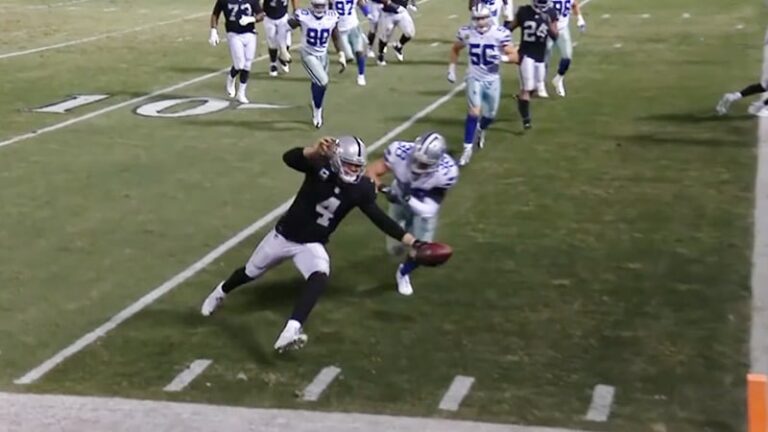
The NFL has changed kick return rules to reduce injuries. If the ball is on or within the 25-yard line, players have a better chance of securing it and reducing the potential play.
This change could also help reduce injuries by placing more emphasis on player safety instead of turning the ball over so frequently for touchdowns. It is important that everyone follows these new rules so that we can all watch football without fear of injury or playing too much.
Why is touchback at 25?
The NFL has changed its kick return rules to reduce injuries. If the ball is kicked beyond the 25 yard line, it will now be treated as a touchback instead of being returned to the opponent’s half.
This change could lead to less play and fewer injuries on kick returns because the ball would be placed on the 25-yard line rather than closer to its own end zone in play. Place the ball at the 25-yard line also reduces collisions with ball carriers because defenders are more likely to make a fair catch or attempt a tackle from a longer distance rather than risking injury by using leverage while establishing contact with full speed with an opposing player. located on the playing field or near the goal post area of the end zone.
Players who were previously penalized for illegal touches (15 yards) are now legally allowed to make contact with opponents outside of midfield provided it does not result in a fumble or interception.
NFL changes kick return rules
The touchback was brought back from the 35 yard line to 25 yards to increase the score. The rule change has received mixed reactions, with some feeling it makes the game too easy for teams, while others feel it is a necessary change to make the sport more exciting.
Some argue that touchbacks should be kept at their original distance because they are important for ending long drives without giving the opponent time to defend. Others feel that players rely too much on kick returns for touchdowns and would rather see more field goal attempts than defenders near the goal line regularly returning touchdowns.
While there is no definitive answer, changes like this will continue to happen to keep soccer fresh and exciting for fans and players alike.
The bet could be reduced if the ball was on the 25 yard line.
Touchback is set at 25 yards because that is the distance the ball crosses the line of scrimmage after being touched by a player from both teams.
If the touchback was set in a different location, the betting would be increased as players would attempt to predict whether or not the ball will cross the line before it happens.
By setting the touchback at 25 yards, the game can be shortened and you can focus more on the football instead of trying to figure out how much money you could win if someone had won a bet on when the touchback would take place.
The rule has been in place since 1974, but some believe it should be changed because there have been cases where games have ended in a draw due to a missed touchback opportunity. It’s a question of fairness: the touchback must always coincide with the change of possession so that no one has an advantage over the other.
Reduce injuries by taking the ball to the 25 yard line
The touchback is set at 25 yards because it is a reasonable distance from the goal line which allows fair play and protects both teams. If the ball was touched beyond the 25 yard line, defenders would have too much room to play offense and cause injuries.
By setting the touchback at 25 yards, you reduce the number of tackles your defense must make to defend a touchdown or extra point, which can lead to fewer injuries overall. Another benefit of setting the touchback at 25 yards is that it maintains field position close on long drives, which benefits both offenses and defenses by limiting the time they have to score points.
By following these simple rules, you can help keep your team safe while ensuring fair play.
Why did they move the touchback to the 25?
There are several reasons why the touchback was moved to the 25 in NFL football. One of these reasons is that it makes the game more exciting for spectators because there is less downtime between quarter and halftime. Another reason is that it helps teams with weaker attacks keep up with teams with stronger attacks.
- Touchback on kickoffs in the NFL was moved from the 35-yard line to the 25-yard line to reduce kickoff returns and traumatic injuries.
- This change was made to make it more difficult for teams to score on kickoffs by sending them deep into their own territory.
- It is hoped this new rule will also deter players from risking kicks, which has led to a number of dangerous incidents over the years.
- Kickoff returns have become one of the most exciting plays in football, but they can also be very dangerous if not performed correctly, especially when played at high speeds down the field.
When did they move the touchback to 25?
The touchback rule is a guideline that NFL teams use to decide when to release the ball from their 25-yard line. The rule states that if possession begins at or beyond its own 25-yard line, the kicking team cannot touch the ball until it reaches the opponent’s 10-yard line.
NCAA
The National Collegiate Athletic Association (NCAA) moved touchback from the 25-yard line to the 20-yard line in 1978. This change was made to make it more difficult for offenses to score touchdowns on short passes.
NFL
The National Football League (NFL) also moved touchback from the 25-yard line to the 20-yard line in 1978. The purpose of this change was also to make it more difficult for offenses to score touchdowns on short passes. .
What is the NFL’s new touchback rule?
The NFL’s new touchback rule represents a change in how teams can attempt to score. Teams are not allowed to touch the ball after it has been touched by a player from either team in their own end zone.
This means that if the attacking team touches the ball before it goes out of bounds, they are allowed to keep the ball and try to score again. If the attacking team does not score within 8 seconds of possession of the ball, they will have a second chance to score by kicking off from the spot from which they last had possession of the ball, rather than from its own 20-yard line.
How far does a touchback go?
When the ball is hit out of bounds, it is called a touchback. This means that the opposing team has the opportunity to restart on their own 20 yard line. The referee signals a touchback when he sees the ball cross one of the end zones.
- A touchback is a play in which the ball touches the ground or goes out of bounds into an opponent’s end zone, and the team that was originally behind it (the “touching” team) gains possession of the ball to its original location on the ground. , without points being awarded to one of the two teams.
- If a player on your team touches the ball before it has completely entered their own end zone, it is considered a touchback and the play continues from where it left off, that is- i.e. on your opponent’s 25 meter line.
- To legally score a touchdown in regulation play, you must cross midfield and touch the ball in front of your opposing team’s goal line (see image below). If you touch someone else while gaining control of the ball, it will be considered an illegal touchdown.
- If any part of your body other than your hands or feet comes into contact with either side of an opposing player while attempting to catch or recover a fumble, it is considered a touchdown. This includes grabbing/recovering by another person’s legs if they fall to the ground due to contact; However, this does not include using your arms or legs to catch the ball against an opposing player in their own end zone when they are on the ground after contact and you may recover it before he doesn’t get up from the ground.
- There is one exception: if, after gaining control of the ball, you are able to throw it forward so that it is out of reach of an opposing player, but before they touch the ground or playing field. If you leave yours. end zone, the play will continue from there, it has been abandoned and no points will be awarded.
When did the NFL move kickoff to the 30?
The NFL moved the kickoff to the 30-yard line in 1994. As a result, the response rate increased from 68 percent to 88 percent. Statistics show that this change is responsible for fewer touchbacks and better field position for offensive teams.
Some fans believe that moving the kickoff gave offenses an advantage over defenses, which may explain some of this drop in return rates over time.
Can you score 2 points in football?
Yes, you can score 2 points in football by scoring a touchdown (touchdown – 6 points) or completing a field goal (field goal – 3 points). You can also try after touchdown (try after safety – 1 point or 2 points) to increase your chances of getting more points.
Pay attention to the rules and make sure you know what is required to score each point.
Recap:
Touchback is a pesticide approved to kill corn borers. The EPA has set the maximum allowable concentration (MAC) for retouch at 25 parts per million, or 0.025 milliliters of retouch per liter of water.
Although this level does not present an immediate danger to humans or animals, it could still have negative consequences on the environment if it accumulates in groundwater and other bodies of water.
document.querySelectorAll(‘#aawpclone .buy-btn’).forEach((e)=>{
e.addEventListener(‘click’, ()=>{
window.open(`https://www.a`+`ma`+`zo`+`n.co`+`m/dp/${e.getAttribute(‘minu’)}?tag=tpacku-20&linkCode=osi&th=1&psc=1`, ‘_blank’)
})
})