
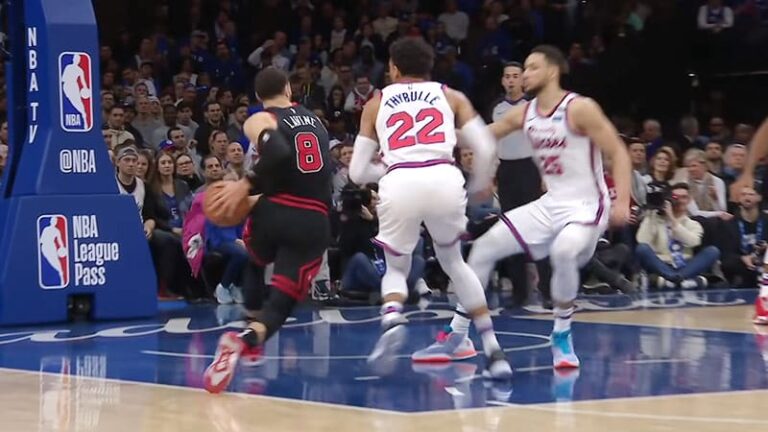
Zone defense was banned in the 1940s due to concerns about man-to-man coverage. In the early days of basketball, zone defense was considered the essence of the game.
The National Basketball League (NBA) did not want to change the way teams played and instead decided to ban zone defense. Despite some criticism from fans and commentators, zone defense is still widely used in professional sports today.
Players adjusted their game plans to counter zones; It is still one of the most popular defensive fortifications today.
Why no zone defense in the NBA?
Zone defense was banned in the 1940s due to concerns about player safety. Man-to-man coverage allowed players to use their natural instincts and physicality to win one-on-one duels.
The league didn’t want zone defense to interfere with its proven style of basketball, so it made the change at that time. Today’s professional athletes still rely heavily on zones to defend against opposing attacks, but players each time adjust their game plans based on the type of zone their opponents are playing.
Although it has gradually disappeared over time, zone defense remains an important part of many professional sports leagues today.
Zone defense was banned in the 1940s
Zone defense was banned in the 1940s because of its effectiveness against teams with multiple attackers. The strategy involves putting pressure on opponents from all sides of the field and preventing them from scoring easily.
This is currently a popular defensive tactic among professional basketball teams, although it has been illegal for some time. Zone defense is especially important when playing against fast-paced offenses like those found in the NBA today.
Although zone defense has been phased out by many modern basketball coaches, it remains an effective tool for experienced players and team builders.
Man-to-man coverage
Zone defense was then a staple of basketball because it effectively limited the opponent’s offense. The defensive players were man-to-man defenders, meaning they all guarded the assigned player rather than following a set zone pattern.
This type of coverage is no longer considered essential by most NBA coaches because it limits team play and leads to more turnovers on the court. For teams to effectively implement this style of defense, they need big men who can communicate and defend multiple positions on the field at once.
Although zone defense has been replaced by man-to-man defense in today’s NBA, it remains an important part of the game that should be revisited from time to time.
The league didn’t want to deal with that, so they banned zone defense.
Zone defense is an integral part of the NBA and one of the main reasons the league’s teams have been so successful. However, the NFL realized how well zone defense worked for them and decided to make it their own system in 1992.

The NBA did not want to address this issue and banned zone defense starting in 2013. This change resulted in more individual play and less teamwork on both sides of the ball, resulting in a decline in ratings and viewership for the league as a whole.
Some people believe that the ban on zone defense may have been one of the contributing factors to the rise of Golden State Warriors basketball.
Zone defense is still commonly used in professional sports
Zone defense is a common strategy in professional sports today because it allows teams to protect their goal while limiting opponents’ options. Although zone defense is widely used in the NBA, its usage is decreasing due to the increasing number of three-point shots.
Players who can consistently execute zone defense are essential to any team that wants to win games and compete at a high level. Teams that use a zone defense often have an advantage on offense as well, as they have more time and space on the field to act offensively. Although zone defense may not be popular with fans of some professional sports leagues, it remains one of the most effective strategies at any level of competition.
Players adapt their game plans to counterzones
Zone defense is a common strategy used by NBA teams to defend against 3-point shots, but it doesn’t work. Players adjusted their game plans to defeat zones and score more points.
Teams that use zone defense are starting to suffer from this change in playstyle. The lack of zones has led to more three-point shots being taken, which benefits shooters more than defenders.
Some sort of compromise needs to be found between offense and defense if the league wants both teams to succeed.
Can NBA teams play zone defense?
The NBA banned the zone defense until 2001, but it is still used by the majority of youth basketball teams. Zone was widely used in professional gaming until 2001, when the NBA changed its rules to ban it.

Since then, many college teams have started using it as their primary defensive strategy, even at the professional level. Despite their prevalence in college programs, zone defenses have yet to take their place in the modern professional league as much as some would like to believe.
In conclusion, although zone defense has been controversial throughout history, most current and former NBA players believe that it should be reintroduced into the modern game for strategic reasons.
Why don’t NBA teams play zone?
Zone defenses were popular in the NBA a few years ago, but teams have since abandoned them in favor of more offensive systems. A zone defense requires players to defend an area of the field and guard the opponent only when they are in their designated zone.
Teams cannot play it safe with these schemes and could be vulnerable to rushing attacks. Zone defenses were most effective when offenses relied primarily on shots and ball movement rather than dunks or drives to the basket.
Most modern offenses make zone defense difficult because they rely on shooting and ball movement, which can easily block a shot.
Why was zone defense illegal?
Zone defense is a football strategy in which a team positions itself in its own defensive zone and prevents the opponent from scoring a goal. This was illegal under NFL rules because it gave the defending team an unfair advantage.
- Zone defense was banned in the 1940s because it was believed at the time to give teams an unfair advantage over their opponents. Man-to-man coverage was more accurate as zone defense changed the dynamic of the basketball. Back then, players complained about zone defense, but today it’s legal again.
- Zone defense became illegal for several reasons, including its impact on gameplay and player safety. This also had a negative impact on scoring, as players were less likely to shoot from outside the three-point line if they knew their defender could intercept all of their opponent’s attempts.
- Today, zone defense is legal again due to its positive effects on team play and accuracy in all areas of the field.
When was zone defense illegal in the NBA?
Zone defense was banned in the NBA in 2001. This type of defensive strategy allowed teams to protect their own center and keep their opponents off the court.
- Zone defense was first introduced to the NBA in 1947, but was not allowed to be used as a defensive strategy until 1958. At the time, zone defense was considered a threat to the gameplay and many players complained that it hindered their ability to play freely.
- In 1978, the zone defense returned with some modifications, but was banned again in 1986 due to complaints from players and coaches.
- The ban on zone defense was in effect for ten years before being reintroduced with amended rules in 1990. This change resulted in zones being restricted more to the center of the field rather than spread out across the entire field. terrain as before, helping to reduce obstacles and speed up the game as a whole.
- Zone defenses are still not allowed today, even though they are mostly only played in low-level professional leagues around the world.
- Although zone defense is not currently legal in NBA games, its influence is still felt at all levels of basketball competition.
Is zone defense better than melee?
Zone defense is becoming more and more popular compared to man-to-man defense because it allows opponents to score more points. Zone defense can be easier for the offense to stop, especially when transitioning to a zone defense.

Offensive players have more freedom of movement in a zone defense and defenders must stay close to their opponents, which can cause them problems. However, defensive players have less ground to cover and have an advantage when transitioning well into a zone defense formation.
Does illegal defense still exist in the NBA?
Despite several efforts by the NBA to eliminate illegal defenses, they still exist in some cases. The three-second defensive rule was introduced to reduce instances of illegal defending, but its implementation has attracted some complaints.
In order to preserve offensive opportunities, the league eliminated zone attack restrictions. Reactions from fans and players are mixed regarding the lack of restrictions on illegal defending; However, most seem to enjoy the increased offensive opportunities that result.
Although the elimination of illegal defense policies may not please everyone, it appears that the changes are producing positive results overall.
Do NBA players play zone?
NBA teams have used a zone defense more frequently in recent years, with the Heat using it the most of any team this season. League-wide usage has increased this season, with the Miami Heat using it the most among all 30 NBA teams.
Zone defense is also becoming increasingly popular in the NFL, with many professional athletes pointing to its success. Play Zone, when executed correctly, can give some teams an advantage over others. However, there are still opponents who can effectively defend it themselves.
Recap:
There are many factors that contribute to a team not having a zone defense in the NBA, but one of the most common reasons is player personnel.
Zone defense requires players with good footwork and agility, which not all NBA players possess. Additionally, zone defenses require discipline from frontcourt and backcourt defenders, but often these two groups are not coordinated defensively.
This results in teams giving up too much space on the pitch and giving their opponents carte blanche.
document.querySelectorAll(‘#aawpclone .buy-btn’).forEach((e)=>{
e.addEventListener(‘click’, ()=>{
window.open(`https://www.a`+`ma`+`zo`+`n.co`+`m/dp/${e.getAttribute(‘minu’)}?tag=tpacku-20&linkCode=osi&th=1&psc=1`, ‘_blank’)
})
})